
The Operational Recovery Layer for Modern IT Environments.
Disaster Recovery as a Service (DRaaS) provides a structured way to restore IT operations when systems become unavailable due to cyber incidents, infrastructure failure, or unexpected disruption. Instead of rebuilding environments from backup data, DRaaS maintains recoverable system replicas that can be activated in an alternate location when needed.
This enables organizations to restore applications, workloads, and services in a controlled and predictable manner while minimizing operational downtime. Recovery processes can be tested in advance, ensuring that restoration procedures work when they are required. Recovery environments are hosted within secure, highly available EasyCloud data center infrastructure, ensuring systems remain ready for activation without maintaining secondary physical sites.
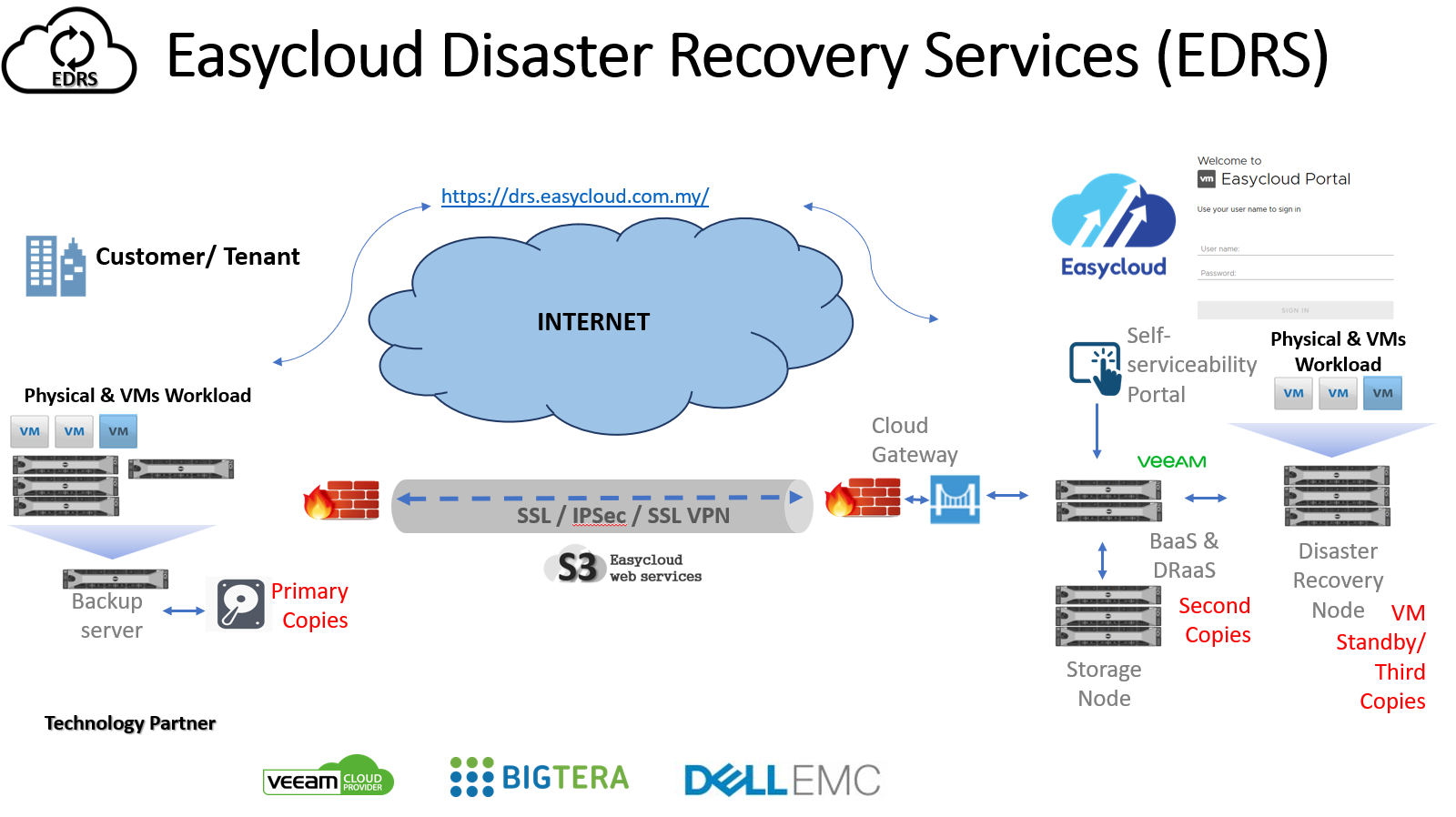
High-level Cloud Infrastructure
Enterprise-Grade.
Scalable.
Cost-Effective.
Why Easycloud?
Designed for Real Recovery — Not Just Backup
Structured Multi-Tier Protection
We use a layered approach—combining on-premise backups, immutable storage, cloud replication, and long-term archiving. This strictly enforces the 3-2-1-1-0 rule, eliminating single points of failure and guaranteeing ransomware recovery.
Consumption-Based Recovery Architecture
Storage replicates continuously, but compute resources only activate during a recovery. This allows you to scale capacity on-demand and eliminates the cost of maintaining idle disaster infrastructure.
Operational Simplicity During Incidents
Pre-defined, automated workflows minimize manual intervention during a crisis. Clear procedures enable your team to restore operations rapidly without complex, stressful rebuilds.
Audit and Compliance Readiness
Built-in recovery testing, strict retention controls, and structured reporting provide the exact evidence auditors and regulators need to verify your compliance and resilience.
Solution Features
Continuous Replication and Recovery Points
Data changes are captured and replicated according to defined recovery objectives to minimize data loss exposure.
Immutable Recovery Storage
Protected storage layers prevent unauthorized modification or deletion of recovery copies, strengthening ransomware resilience.
Consumption-Based Recovery Compute
Recovery infrastructure is activated only when needed, supporting pay-as-you-use disaster recovery operations.
Non-Disruptive Recovery Testing
Recovery processes can be validated without interrupting production workloads, supporting operational readiness verification.
How it works?
Continuous Availability Through Structured Recovery.

Replicate
Data and system changes are continuously replicated to secondary storage tiers and optional cloud recovery locations based on defined protection policies.

Protect
Recovery copies are secured using immutable storage and retention controls to prevent alteration or deletion during cyber incidents.

Recover
If disruption occurs, workloads are activated in the recovery environment using predefined orchestration sequences that restore services in the correct operational order.

Return
Once the primary environment is restored, data synchronization resumes and workloads can be migrated back without rebuilding systems.
Solution Certified Partner's
Trusted by the Technology You Use







FAQ
Backup focuses on preserving data copies for restoration. DRaaS focuses on restoring operational environments so systems can continue running after disruption.
Recovery data can be protected using immutable storage and point-in-time recovery, allowing restoration to a clean state before compromise.
No. Recovery infrastructure is provisioned when needed, eliminating the requirement to maintain permanently active standby environments.
Structured retention policies, recovery testing, and documented recovery procedures help organizations demonstrate resilience capability and maintain audit evidence.
Yes. Recovery procedures can be validated in isolated environments without interrupting live operations.